Showing posts with label John Gordon Photography. Show all posts

Thursday, 28 July 2022

The Narwal: Extreme Heat and Habitat Loss

 July 28 2020 


Extreme heat a strain for birds already burdened by habitat loss
Habitat conservation and action on climate change are needed to lessen threat to at-risks species.


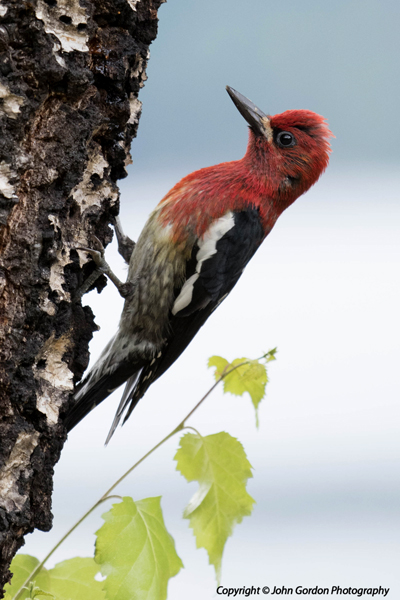
See story in the The Narwal which used my Red-breasted Sapsucker and Merlin images.


This Merlin had two hungry offspring to keep happy.

Click on the link below


 The image below was not used as the Narwal magazine format is for landscape rather than vertical. The vertical shot below would make a perfect cover shot. Don't forget to leave room the magazine's name and inside contents. 


"It's never too late for deadlines"
John Gordon Photography
Langley/Cloverdale
BC. Canada


Tuesday, 3 November 2020

Nature Walk & Forest Bathing (Shinrin Yoku)

 Nature Walk & Forest Bathing

In September a few DRBIPA members, supporters, and volunteers headed out on a socially-distanced guided nature walk at Derby Reach - with John Gordon, professional photographer, author, and Langley Field Naturalist. We learned about letting ourselves be encompassed by our surroundings and how this can help nature photographers. John also shared some of his best tips and tricks for getting good nature shots. It was a great morning out in the park surrounded by trees, even in the rain! 


Osoberry or Indian Plum


Forest bathing is simply spending time outdoors under the canopy of trees and immersing oneself in the forest and soaking in the atmosphere through the senses. John taught us about his approach to forest bathing, about being still and silent until the quiet forest becomes alive with sounds and sights you didn't know were there. A perfect activity for nature photographers and all nature lovers!


Sunset with a 50mm lens shot
 wide open at F1.4


According to Dr. Qing Li, author of Forest Bathing: How Trees Can Help You Find Health & Happiness, the key to unlocking the power of the forest is in the five senses. He advises to let nature enter through your ears, eyes, nose, mouth, hands and feet. A two-hour forest bath will help you to unplug from technology and slow down. It will bring you into the present moment and de-stress and relax you.


The Pathway/Brydon 


DRBOBA Newsletter


"It's never too late to take up the art of forest bathing"

John Gordon

Langley/Cloverdale

BC Canada

Tuesday, 15 September 2015

Coast to Coast Presentation


If you have the time come along an enjoy this free presentation. The library is in the Langley Township Hall behind the London Drugs/Walmart Complex. 


Saturday, 24 November 2012

Boundary Bay Birding or raking leaves!

Nov 24, 2012 Boundary Bay, Delta British Columbia. Cool and Sunny.

The big decision was to either go birding or rake the thousands of leaves lining the driveway.
By the time I arrived at the parking lot at Boundary Bay and 72nd Ave it was already full of vehicles. It was not only a glorious morning for birding or walking the dog but with the added bonus of Snowy owls that have returned for the second time in two years.
Often overlooked by the casual visitor are the Short-eared owls (see below) and the Rough-legged hawks which can be seen hovering above in the nearby fields. There are also numerous Northern harrier whose antics while hunting can be quite amusing, sometimes they even steal the prey from the Short-eared owls (see previous blog)

The one of many voles caught by this short-eared owl during an afternoon hunting session.

Short-eared owl flies away with a vole in it's talons. 
Other birds noted were Northern shrike, American robin, Yellow-rumped warbler, Song sparrow, White-crowned sparrow, Savannah sparrow, Western meadowlark, Northern flicker, Bald eagle and Snowy owl.
A Bald eagle surveys the Boundary Bay Golf course.


Yellow-rumped warbler

Friday, 26 October 2012

A Mixed Bag

Oct 25th 2012 Mixed cloud and sun.
 Iona Regional Park Richmond B.C.
With family commitments put away and the weather forecast predicting a dry and sunny day I set off for Iona Regional Park in Richmond. Driving up to the parking lot five Western meadowlarks could be seen eagerly searching for food. These prairie birds seem to feel quite at home on the sand that has been deposited here over the millennium. Meadowlarks are most noticeable when they perch in the few bushes which have sprouted up along the beach, however they do spend most of their time scurrying around in the long grass, ever wary of the northern harrier and other raptors looking for a meal.
As per usual I met number of really interesting birders and photographers, exchanging niceties about lens length etc (a male obsession), bird lore and the latest sightings.. it beats working!
 My favourite shot of the day was the Goldfinch (below) which was taken half-way through once such discussion, it pays to keep attentive!

American goldfinch  

Northern Harrier hunting.
Keeping an eye out for trouble!


Great horned owl (note the white around the throat)


Anyway, after photographing a flock of American goldfinches that were feeding on seed heads the subject of a Great horned owl came up in  conversation. This news sent me scurrying off to the Terra Nova garden allotments in Richmond. A small murder of crows immediately gave away the owls location. The bird has become quite the celebrity, it barely moved as a procession of schools groups and seniors filed to get a good look. It was perched about fifteen feet from the ground where it nonchalantly  viewed all and sundry.
The bird has become quite the hunter dispatching two barn owls over the last few  days. Apparently the Great horned owl doesn't like competition, it has even attacked a gardener!

Monday, 9 July 2012

Blackie Spit (Morning Walk)

Monday July 9,2012 6.A.M.
Apart from one other early bird (excuse the horrible pun) I had Blackie Spit and the birds all to myself. The ocean was dead calm, the flood tide was about to begin and the only sounds were provided by Mother Nature herself. Above me two Caspian terns were diving for fish, a dozen black-bellied plovers, their breeding plumage beginning to fade fed on the estuary mudflats. Five Kildeer, some of them youngsters were hunting for food in the exposed eel grass while one after another, a parade of Great blue herons flew overhead, all going in the same direction to where, who knows!
I settled down to photograph Savannah sparrows and their young. I was quickly distracted by a flock of house finches feeding on seed pods, an American goldfinch flew in close enough for a quick picture, three frames and he's gone.
American goldfinch.

Savannah sparrow.

Over my shoulder I see a movement on the beach, it's a Long-billed curlew feeding in the shallows. I have to work fast before the first dog guardian/owner arrives as the bird is feeding in the off-leash area of the beach. I make myself as small as possible as I inch my way toward the waterline, slowly but surely the bird accepts my presence and continues to feed. I spend 15 minutes kneeling in the mud but it's all worth it in the end.
Good birding!!

A long-billed curlew prepares to swallow a small crab.

Long-billed curlew/Blackie Spit.


Monday, 2 July 2012

2012 B.C. Bird Atlassing /Chaunigan Lake Part 1


Despite the ten hour drive to get to Chaunigan Lake, the lack of electricity and running water and scary biffy, the week long expedition was a great success. I hope you enjoy these images as much as I enjoyed the mosquitos...........just kidding!


"Rustic" cabins at Chaunigan Lake.

A view from my bunk. Waking up to a million $$$$ view which we shared with the little critter below!


Caught in the act. A guilty looking Deer mouse checks out our food cache
June 23-30 2012
Following is a edited selection of my photographs from the week long 2012 British Columbia Bird Atlassing Count in the Chilcotins area of B.C.
Participants included trip organizer Gareth Pugh, fellow naturalists/birders Wim Vesseur, Leona Breckenridge, Bob Puls, Viveka Ohman, Ian Robertson and myself. The count area included parts of the Nemaiah Valley, Chaunigan, Elkin and Vedan Lakes and adjacent areas. The final count is not finalized but at least one hundred species were identified either by photograph,song or by visual means.
Full results from the count will be available soon on the website below. For more information about the British Columbia Bird Breeding Atlas follow the link below:


British Columbia Bird Breeding Atlas

More images can be seen at
http://www.johngordonsphotography.com
Spruce Grouse Chaunigan Lake, B.C.

Osprey

Empidonax flycatcher but which one!

More
Bonaparte's gull One year old/non breeding with rainbow trout catch

Bonaparte's gull/breeding adult/Chaunigan Lake

  
Caspian tern/Chaunigan Lake


More
Downy woodpecker/Vedan Lake.

Red-naped sapsucker/Vedan Lake area.

Female Barrow's goldeneye/Chaunigan Lake.

Savannah sparrow.

A Lincoln sparrow balances on one foot

Pine siskin.     


more
White-crowned sparrow takes insects to the nest

This fearless coyote had just been shoreline nest hunting when we spooted him.


Common loons fishing Chaunigan Lake.


more
An American robin is drenched in spray while feeding along the shoreline of Chaunigan Lake.

American kestrel/Big Creek.

A Bald eagle soars along the Chaunigan Lake shoreline.

Sunday, 10 June 2012

Western Road Trip Part 7 (Common and Forster's tern)


The first are the Forester's tern with an orange black tipped beak and longer tail projection that can be seen in the second series of photos. Please let me know if you have different opinion as I am just a beginner birder.
The first were photographed at Val Marie near Regina. The second series are from Chaplin IBA Saskatchewan.
Forster's tern. Note long tail feathers and orange feet and bill.

This Forster's tern had dropped it's catch mid-air but made an acrobatic upside down recovery.

Common terns at Chaplin, Sask June 2012
Common tern diving for fish at Chaplin IBA Sask

The water is about two feet deep.
but the fishing trip was successful

Note lack of long trail feathers and red beak and legs.


Western Road Trip Part 6 (Another "Lifer" Redhead duck plus some Wilson's)

My very first and only ever sighting of a Redhead duck was this small flock flying near Val Marie (IBA) Craven, Saskatchewan. Slightly fortuitous as I was photographing Forster's terns diving for fish and happened to look up and there they were just in range for a half decent shot. I think this may make a nice print, we'll see. The area is usually spayed for mosquitos so the bird life has dropped off in the past few years. This year there was no spraying and the warblers, flycatchers and others insect feeding birds are back in force.

Earlier in the day in a waterlogged ditch I came across a Wilson's snipe as well a pair of Wilson's phalarope. Although close to an IBA they choose to forage in puddles and ditches.
Wilson'd phalarope

Wilson's phalarope

Wilson's snipe