Showing posts with label Saskatchewan. Show all posts

Thursday, 4 July 2013

Final Thoughts Saskatchewan Part 3

June 4-5 2013  Regina Beach, Saskatchewan
My whirlwind visit of Saskatchewan via Point Pelee and Churchill came to an end with two more days of birding.
I had 31 'Lifers' in Ontario, 9 in Churchill and a Brown Thrasher in Saskatchewan. That's 41 plus a few flycatchers yet to be identified.
This is my second annual birding road trip and so far it has been two for two. Last year I drove through southern B.C, the Okanagan, Milk River in Alberta and Regina and had a great time.


I decided to photograph at Craven at the very southern tip of Last Mountain Lake. Reed beds and slow moving river, sloughs, open lake and quiet backwaters attract a multitude of species. 

Cliff Swallows (Petrochelidon pyrrhonata))
Hundreds of Cliff Swallows (above) nest under a bridge at the entrance to the Exhibition Grounds in Craven.

Kildeer (Charadruis vociferus)

Swainson's Hawk (Buteo swainsoni)
The Swainson's hawk winters as far south as Argentina, only the Peregrine Falcon travels further.
This bird was hunting along route 99 between Craven and Regina.

Yellow-headed Blackbird (Xanthocephalus xanthocephalis) is a very common bird on the prairies.

List of Saskatchewan Birds:
Yellow Warbler, Song, Vesper and Savannah Sparrow, Baltimore Oriole, Forster's Tern, Black Tern, Swainson's Hawk, Ring-billed Gull, Eastern and Western Kingbird, Gray Catbird, American Pelican, American Robin, Willet, Northern Shoveler, American Widgeon, Mallard, Greater Scaup, Bufflehead, Black-billed Magpie, Western Meadowlark, Warbling Vireo, Yellow-headed Blackbird, Red-winged Blackbird, Brewer's Blackbird, Canada Goose, Common Grackle, Wilson's Phalarope, Kildeer, Brown Thrasher, American Goldfinch, Horned Lark, Brewer's Blackbird, Western Grebe, Starling, European House Sparrow, Cliff, Bank, Barn, Tree and Cliff Swallow, Purple Martin, Gadwal, Green-winged Teal, Northern Pintail, Blue-winged Teal, Canvasback, Redhead, Cedar Waxwing, Bobolink, Turkey Vulture, Horned and Eared Grebe, Wilson's Snipe and Flycatchers???

Are these Western Grebe on the left and Clark's Grebe (right) or both Westerns, any takers out there?
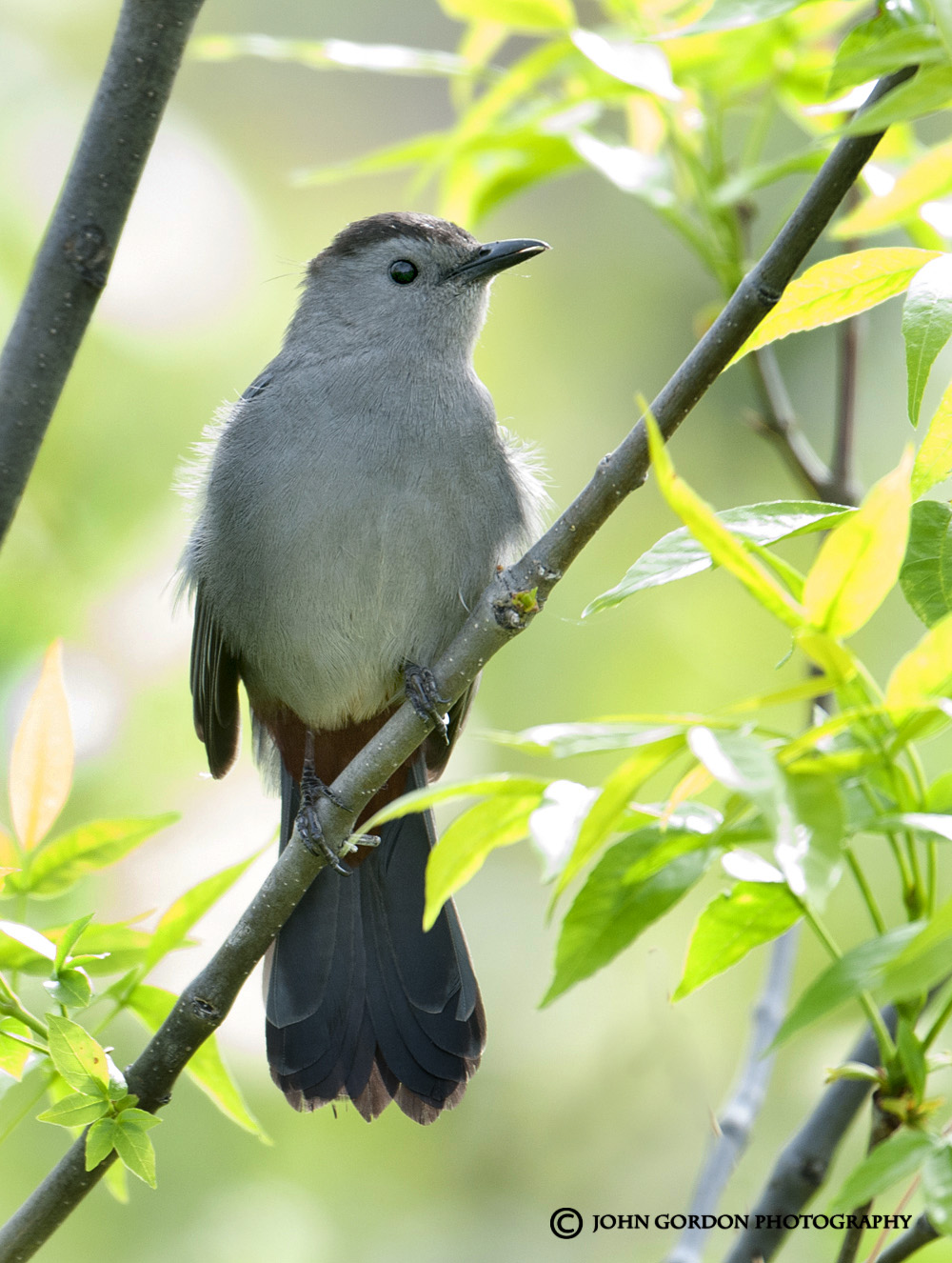
Gray Catbird (Dumetella carolinensis)

Wednesday, 3 July 2013

'A Slough of Birds' Saskatchewan Part 2

June 4 2013 Regina Beach, Craven, Saskatchewan.

A Slough of Birds

The second day of the 2013 road trip in Saskatchewan was one of driving around exploring new backroads in the hope of seeing a Sharp-tailed or Ruffed Grouse. Everyone I spoke to had seen 'Prairie Chicken' and suggested I take an early morning drive along just about any gravel road. Apparently they were everywhere. I drove and walked and searched but none were to be found, not even a tail feather, not a glimpse! I suppose it's a perfect excuse to plan another road trip sometime soon! 
However, I did see fifty-three species of birds including some goodies like Forster's and Black Tern Willet and Swainson's Hawk.  I'm sure any experienced birder could have achieved a much higher tally quite easily but I know that will come with time spent in the field.
What can one say out this little corner of Saskatchewan. It's amazing,very accessible and close enough from B.C. for a two week road trip and if you fly, less than an hour from Regina Airport. You could be birding that same evening. If you decide to drive don't forget to stop off at Chaplin Lakes to see the Piping Plover, Black-Crowned Night-Herons and flocks of American Avocets. While Saskatchewan has some of the best birding in North America, April or May are the prime times with the Fall being the best chance of seeing both Sandhill and Whooping Crane migrations. 
On a weather note both April and May can produce surprise snow storms so make sure you are well prepared and are able to hunker down for a few days while keeping warm and fed. You can still bird but the backroads can get difficult. That is how I came to see the Piping Plover last year. I had to shelter at Chaplin Lake and when the snow stopped I took a drive around the lake and within minutes found a single Piping Plover feeding in the shallows. 
A roadside portrait of a Wilson's Snipe (Gallinago delicata),  Regina Beach, Saskatchewan.
The Slough
  • Slough, a stream distributary or anabranch, or in some cases, a regular stream.
More localized meanings of slough are:
  • a muddy marsh in the British Isles.
  • swamp or shallow lake system with trees (Eastern and South Eastern United States).
  • a secondary channel of a river delta, without trees (Pacific coast of North America).
  • pond, often alkaline, often a glacial "pothole" (prairies of North America (see Prairie Pothole Region).


A typical prairie slough in June. Note the cultivated fields behind.
Farmers are working with naturalists to leave a swath of wild grasses to ensure nesting birds are safe from tilling, ploughing and spraying. A slough like this in Craven will host numerous species of ducks, grebes, phalarope, and Yellow-headed and Red-winged blackbirds. Various sparrows including Vesper and Savannah while Meadowlarks, Bobolink, Horned Lark and sometimes Willet nest nearby.


Eared Grebe (Podiceps nigricollis)

Redhead (Aythya americana)

Wilson's Phalarope (Phalaropus tricolor) feeding on dragonfly larvae.

A pair of Willet nest close to a slough at Regina Beach hunt and for food in the adjoining fields and pastures.

Sunday, 30 June 2013

Saskatchewan Road Trip Part 1


June 1 2013 Regina Beach, Craven, Valeport and Rowan's Ravine. Saskatchewan

The area around Regina is ideally situated for a great birding holiday. I returned from Churchill via Winnipeg and caught the overnight Greyhound bus to Regina, apart from renting an expensive one-way rental car it was the only way to get to my next birding area.
Regina and area (see map inset for location) is on the main Central flight path and provides great birding from March through to November. Ducks and geese arrive even when the ponds and sloughs are still frozen. One of the the highlights are the Whooping and Sandhill Crane flocks that pass through Rowan's Ravine area in April and May. The wide open fields offers food and protection as they make their way to Wood Buffalo Park to nest. During my early June visit the rearing process was already well under way.


American Pelican (Pelecanus erythrorhynchos) at Regina Beach. Regina Beach is where Regina should have been built and is at the southern tip of Last Mountain Lake. Clark's, Western, Pied, Horned, Red-necked and Eared Grebe can be found there.

Plan to spend a week here. Thirty minutes North-West of Regina there are hundreds of miles of birding. Rowans Ravine and campsite is at the Last Mountain Bird Observatory.


Brown Thrasher ( Toxostoma refum)
Finally a Brown thrasher that would trust me enough to get a few pictures. I was at Rowan's Ravine when I spotted a Brown Thrasher in the undergrowth, a bird I had never photographed. Later I found another pair in the hedgerows of the campground where they perched before dropping down to feed on insects and worms.


Bison used to roam this area prior to First Contact. From Yellowstone in the south to Edmonton and east to Winnipeg millions of Bison and  Pronghorn Antelope made an annual northward migration in search of fresh food sources. Sometimes called the 'Serengeti of North America'  the herds were followed by Grizzly, Black Bear and Mountain Lion.
 Then there were the birds, although numbers have decreased dramatically enough remnants population remain for us to study and enjoy. Fortunately nature has been resilient, some prairie species have decreased by 80% (Sprague's Pipit) while others populations like the Western Meadowlark and Horned Lark have adapted to the changing landscape. 


Baltimore Oriole (Icterus galbula) feeds on an abundance of insects at Rowan's Ravine. The campsite and surrounding paths and roads are a wonderful place to see many grassland birds. For those with a boat there is access to Last Mountain Lake with its Pelicans, Cormorants, Gulls and shorebirds.

Bobolink (Dolichonyx oryzivorus)
Driving between Rowan's Ravine and Regina Beach I always taken the road less travelled with the chance of seeing one of my favourite birds, the Bobolink.  Bobolink nest in fields and wet meadows and can often be seen sitting on barbed wire and fenceposts. The Bobolink has one of the longest migrations of all songbirds spending the winter east of the Andes in South America. Once common, their numbers have plummeted due to loss of habitat and hunting on migration. They once existed in the tens of millions.

Wednesday, 13 June 2012

Western Road Trip Part 9 (Burrowing owl)


Burrowing owl

Large tracts of farmland in southern Saskatchewan were still underwater after a very wet winter. The wood ticks were everywhere, especially during the moist and humid weather typical of mid to late May.
I had heard that an owl had been seen sitting on a fence post at a nearby farm. What type of owl no one knew but it had been seen earlier in the day.
After walking the field and stumbling on what appeared to be a badgers den, a sudden flash off wings announced the presence of a Burrowing owl. I backed off and sat quietly about a 150 feet away from the burrow. Thirty mosquito bites later the bird returned. It sat on a post glaring at me before flying back to the vicinity of the burrow where I managed 4 flight shots, three of which were slightly out of focus and this one "keeper"
Although protected here in Canada the birds are subjected to numerous hazards during migration and on its wintering grounds where DDT spraying is commonplace.
.
Burrowing owl 


Sunday, 10 June 2012

Western Road Trip Part 7 (Common and Forster's tern)


The first are the Forester's tern with an orange black tipped beak and longer tail projection that can be seen in the second series of photos. Please let me know if you have different opinion as I am just a beginner birder.
The first were photographed at Val Marie near Regina. The second series are from Chaplin IBA Saskatchewan.
Forster's tern. Note long tail feathers and orange feet and bill.

This Forster's tern had dropped it's catch mid-air but made an acrobatic upside down recovery.

Common terns at Chaplin, Sask June 2012
Common tern diving for fish at Chaplin IBA Sask

The water is about two feet deep.
but the fishing trip was successful

Note lack of long trail feathers and red beak and legs.


Western Road Trip Part 6 (Another "Lifer" Redhead duck plus some Wilson's)

My very first and only ever sighting of a Redhead duck was this small flock flying near Val Marie (IBA) Craven, Saskatchewan. Slightly fortuitous as I was photographing Forster's terns diving for fish and happened to look up and there they were just in range for a half decent shot. I think this may make a nice print, we'll see. The area is usually spayed for mosquitos so the bird life has dropped off in the past few years. This year there was no spraying and the warblers, flycatchers and others insect feeding birds are back in force.

Earlier in the day in a waterlogged ditch I came across a Wilson's snipe as well a pair of Wilson's phalarope. Although close to an IBA they choose to forage in puddles and ditches.
Wilson'd phalarope

Wilson's phalarope

Wilson's snipe