Monday, 6 February 2017

Birding San Blas (Afternoon)


Isla del Ray/Del Ray Island San Blas
Touted as a "Little Bit of Old Mexico" San Blas is a sleepy little town with endless beaches, waterways and most important of all bird rich mangrove swamps. 
The town of San Blas was founded by the Spanish in 1768. The fort which sits overlooking the city was used to store gold and silver which was then transported to Europe and the Orient. Ships set off here to map the Pacific North-West. San Diego was founded and named by expeditions out of San Blas.
San Blas town centre Christmas tree.
Taken with iphone 5
I have to thank my birding buddy Ed Jordan from Quadra Island who when I casually mentioned I planned to visit San Blas quickly stepped forward and made all the arrangements. Thanks Ed. Even though he had just taken part in the recent January 2 San Blas Christmas bird count he didn't need much encouragement to make another visit, any excuse to go birding I suppose! 

The square and church downtown San Blas.
 Taken with iPhone 5 

We arrived early afternoon after taking the 7.30 a.m. bus from Rincon de Guayabitos. After booking into our hotel we were soon headed out for a short walk to nearby Del Ray Island. An elderly fisherman ferried us out in his 14 footer. He would pick us up later. 

A short boat ride took across the river to the island.

We already had a dozen species by the time we landed. Walking through the small forest more species kept coming. Warblers included northern water thrush, tropical parula, black-throated gray, MacGillvrays and Nashville. 
Tropical parula.
The friendliest and most "phissable" of birds.


Twenty species in the first twenty minutes and we hadn't even reached the other side where a beach would provide opportunities for sandpipers, gulls and herons etc. 


Northern Waterthrush

Ed suddenly stopped in his tracks and pointed to my right. Deep in a forest glade a shaft of sunlight illuminated a ferruginous pygmy-owl.


Ferruginous pygmy-owl

This was to be my first Mexican owl but not my last.


Finally we reached the beach where a good look through our bins revealed a great selection of shorebirds including black skimmers, royal terns, laughing gulls and more.
Here we counted 52 black skimmers and a hundred plus royal terns.
Black skimmers.
American oystercatcher
Long-billed curlew

After two hours baking in the sun our walk was over and time to prepare for the evenings birding. I whistled across the river to rouse our boatman, finally he stirred from his afternoon slumber and made his way over to pick us up. While waiting we picked up a few more birds for an afternoon tally of fifty-three species in two hours, not a bad way to start our three day trip. In a few hours we head off to the La Tovara Forest mangrove swamps and more potential excitement.

Isla del Rey, Nayarit, MX
Jan 23, 2017 11:15 AM - 1:15 PM
Protocol: Traveling
4.0 kilometer(s)
52 species (+1 other taxa)

Rufous-bellied Chachalaca  6
Magnificent Frigatebird  27
Blue-footed Booby  7
Neotropic Cormorant  5
Brown Pelican  14
Great Blue Heron  4
Great Egret  1
Snowy Egret  3
Reddish Egret  1
Black Vulture  18
Turkey Vulture  15
American Avocet  1
American Oystercatcher  8
Black-bellied Plover  2
Whimbrel  2
Long-billed Curlew  1
Ruddy Turnstone  4
Spotted Sandpiper  3
Willet  9
Laughing Gull  75
Heermann's Gull  26
Ring-billed Gull  1
Caspian Tern  1
Royal Tern  100
Black Skimmer  52
Inca Dove  5
Common Ground-Dove  1
White-tipped Dove  2
Ferruginous Pygmy-Owl  1
Elegant Trogon  1
Belted Kingfisher  1
Golden-cheeked Woodpecker  2
Crested Caracara  1
Pacific-slope Flycatcher  1
Dusky-capped Flycatcher  2
Great Kiskadee  3
Social Flycatcher  3
Tropical Kingbird  4
Northern Rough-winged Swallow  14
Mangrove Swallow  3
Blue-gray Gnatcatcher  4
Rufous-backed Robin  1
Northern Mockingbird  1
Louisiana/Northern Waterthrush  4
Nashville Warbler  2
MacGillivray's Warbler  4
American Redstart  1
Tropical Parula  4
Black-throated Gray Warbler  1
Wilson's Warbler  6
Grayish Saltator  3
Great-tailed Grackle  1
Streak-backed Oriole  2


"It's never too late to start birding"
John Gordon
Langley Cloverdale 
BC Canada


Saturday, 4 February 2017

Birding San Pancho

Jan 20 2017 San Pancho/San Francisco Nayarit Mexico Sunny 24c

San Pancho, also known as San Francisco is less than an hour north of Puerto Vallarta. 
Scott, a good friend of mine from my newspaper days was kind enough to pick me up at Rincon de Guayabitos. Our first stop was Huertas Golf Club in San Pancho where the first bird we saw was the resident bat falcon. The easiest lifer one could hope for and brilliant way to start the day.

Bat falcon

We birded the golf course before making our way north a few kilometres on Hwy 200 where we turned off at the 116 km sign. We followed a dry creek bed slowing gaining altitude. Every stop revealed a great selection of birds. I'm sure we missed more birds than we saw but the scenery made up for any of our shortcomings as birders.

We crossed the creek a number of times in Scott's 4x4, passing through open grasslands and mixed decidious forest. There were numerous kinds of flycatchers including pacific-slope, grey and white-breasted. Parakeets flocked to trees laden with fruit. Watching the latter fly free in the wild is an awe inspiring experience. 
White-breasted flycatcher
 As we approached one of the many fording points over the creek a pair of green kingfishers kept just ahead of us. I photographed the kingfisher from the car window, while the engine was still running. Birding from a car is often more successful, it seems birds are accustomed to vehicles more than they are of humans on foot.


Green kingfisher.
 Due to logistics we had in birding terms a late start. After climbing through the hills the freshness of the morning had already wore off. Birding in Mexico is best from 7-11 a.m after which it gets too hot  and too contrasty for decent photography. 

*****

Photographing a black and white bird in searing heat and haze is as difficult as it gets so the shot below ends up being classified as an ID shot.


Below is one of my series of having more than one species in a frame.
Juvenile 1st year little blue heron (foreground) and snowy egret.
As we drove around one corner I spotted a flock of thick-billed ani bathing themselves on an ant hill. 

Thick-billed ani

                 Look closely at the tail of the bird where ants can be seen crawling over the bird.

Lineated woodpecker.
Finally as we returned a flock of orange-fronted parakeets landed in a tree above our heads. This shot  below is from thirty feet away and is far better than I would have ever thought as I had to shoot through thick foliage.
Orange-fronted parakeet.
Another great morning of birding and time to have a cold beer and a well deserved afternoon siesta.

"It's never too late to start birding"
John Gordon 
Langley/Cloverdale 
BC Canada

Thursday, 2 February 2017

Birding Sayulita

 Jan 10 2016 Sayulita Nayarit Mexico.

Visitors normally flock to Sayulita to shop, surf and party. That aside it was a flock of black-throated magpie jays that interested me. I hadn't seen any so far on the trip and they would fair game for my ever growing life list. I was told there was a flock near the Pacifico bus stop. There was, but unfortunately they took off before I could get a shot. I didn't matter I had my tick.
The town of Sayulita is a rambling collection of over priced souvenir shops, restaurants, and surfboard rentals thirty minutes north of Puerto Vallarta. On the plus side the birding proved to be very good.
I only had two hours to bird so there was no time to lose. I made my way down to the beach, best known for its good waves. There a small creek snaked its way across the sand into the ocean. Close-by an outcrop of rocks looked promising. When I arrived there were several people harvesting oysters but few birds. After they had left birds began to return to feed on the plentiful supply of crabs and fish caught in the rock pools.


Yellow-crowned night heron.
First in was a yellow-crowned heron. Overhead an osprey hunted, dived and took off with a fish so large it could hardly fly.
A yellow-crowned night  heron swallows a crab.


               Snowy egret and great egret, another of the series of multiple species in one frame.

Female and male great-tailed grackles feed on crabs close to the waterline

Elegant tern squabble and flex their wings.


Spotted sandpiper.

Hop, skip and jump, a spotted sandpiper tries out for avian olympics.


White Ibis juvenile.

Working in unison, a small flock of juvenile white ibis feed in the creek upstream of the beach.

Soon my two hours were up and besides it was almost 11 a.m. and it was getting too hot for birding.

"It's never too late to start birding"

John Gordon
Langley/Cloverdale
BC Canada


Tuesday, 31 January 2017

Birding La Penita

Jan 12-24 La Penita, Nayarit Mexico

La Penita is the northern portion of three closely linked communities of Rincon de Guayabitos and Los Ayala to the south. Each town is quite different in character and all are connected by taking a ten peso (70 cents) taxi service. They all have good birding spots. La Penita itself has a creek, beaches and a not to be missed market every Tuesday. Here are some more of the birds I found in the community of La Penita during my stay.
Willet
By far the most common shorebird hereabouts is the willet. While it is almost impossible to get near one on the prairie breeding grounds, here in Mexico they can be seen dodging waves and beachgoers with little or no fear. Only off leash dogs send them off to a more deserted spot.
Broad-billed hummingbird
The La Penita RV Park has its fair share of Canadians escaping the cold weather. Some of them feed the hummers, making it a little easier to get some close-up shots. 


Ruby-throated hummingbird
As mentioned in a previous blog a creek divides La Penita and Rincon de Guayabitos. There is always something happening at the waters edge. Below a mature brown pelican snags a fish.


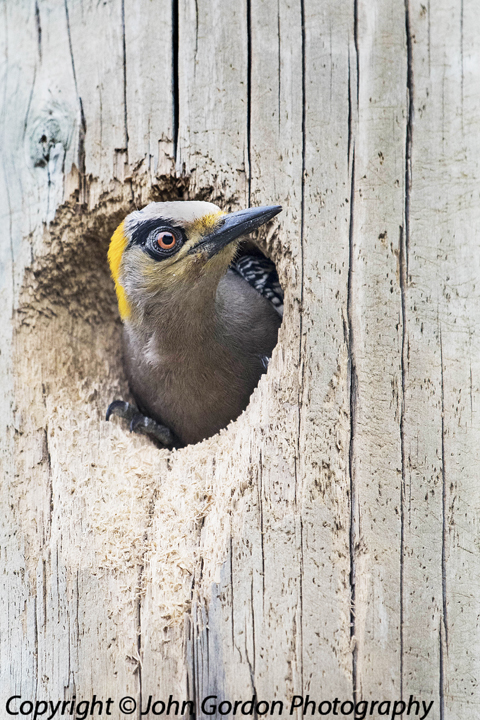
It's a wonder that La Penita's electrical poles are still standing. The culprit is the endemic golden-cheeked woodpecker.

Golden-cheeked woodpecker.

If there was just one bird I was hoping find and photograph on this trip it would have been a painted bunting. I had photographed one earlier in the week but from quite a distance. If I had choose only one picture to bring back home, this would be it.

Painted bunting
Female painted bunting.


White-collared seedeater.


Cassin's Vireo
Sinaloa wren.
Sinaloa wren.

River crocodile
Brown Pelicans diving.
Nikon P900

All other images Nikon D500 and 200mm-500mm 5.6


From a series of shots that feature more than one species. Black-necked stilt and greater yellowlegs.
Another from the same series of more than one species in a frame. A great-tailed grackle and black-necked stilt.

Hooded oriole.


Thanks for your patience if you got this far in the blog. A very dodgy internet connection makes blogging a challenge and  somewhat time consuming. However if you hang in there I have some terrific birding experience to share with you all'

"It's never too late to start birding"

John Gordon
Langley/Cloverdale
BC Canada


Sunday, 29 January 2017

Birding Chula Vista


Jan 15  2016 Chula Vista Nayarit Mexico.

Chula Vista is comprised of tropical decidious forest, wetlands and savanna, a few seasonal ponds, some older growth trees and a number of freshwater creeks. The remaining land is cultivated with corn and pineapple plantations. Coconut and palm trees and thick secondary growth offer food and shelter for birds like the cuckoo squirrel, citreoline trogon, rose-throated becard and ivory-billed woodpecker. 

Ahinga
Chula Vista was my first walk into the Mexican countryside. Most of my birding has so far has been on beaches, around tourist resorts and in and around small villages and towns. The amount of bird life there was simply stunning so a walk in the country side was going to be an exiting experience with an opportunity to encounter some new species. At our first designated stop we had a dozen species. I won't soon forget my first vermillion flycatcher. It was hawking insects, just far enough away to thwart my efforts of a decent photo. Thankfully I was to get more chances later on.
What's a blog full of birds if you can't see where they live. The fields and trees held a wide variety of species.
Kevin and Myrna from Edson Alberta and Ed from Quadra Island showed me around.
Moving on we flushed a number of Wilson's snipe. In the trees Sinaloa wrens, Nashville and orange-crowned warblers picked off insects and in one tree an Eastern meadowlark, normally seen in open fields watched our movements.

Eastern Meadowlark.

Blue-black grassquit. 
In the brush along the dirt road flocks of blue-black grassquit, ruddy-ground doves were busily making the best of the early morning dew.
Eventually the seasonal ponds and creek dry up forcing birds into smaller and smaller areas.
We walked along the side of one field which this time last year was several feet deep in water. It has been a very dry winter in Mexico, good for tourists but not so good for farmers.

Despite that, the small body of water that remained did offer up a number of greater yellowlegs, least, stilt and spotted sandpipers. Several hundred black-bellied whistling ducks preened while around them fifty of so long-billed dowitchers slept with one eye open, prepared to take off if a predator appeared unexpectantly. It's strange seeing blue-winged teal, cattle egrets, roseate spoonbills and American wigeon co-existing. A white-faced ibis came in to join the other birds at the very same time a peregrine falcon passed over the pond.

Roseate spoonbill and black-bellied whistling ducks.


Leaving the pond behind we ventured back into farmland where a Harris's hawks landed in a large tree surveying the fields for prey. I was lucky enough to capture this one in flight (see below) albeit against the sun.
Harris's Hawk.
Streak-backed oriole.

One family of birds I hadn't seen in Mexico were falcons. Just as we were heading toward the end of our walk Ed spotted a laughing falcon perched high up on a tree. At first it was obscured, then suddenly it took off in our direction. I came close enough for me to get a few flight shots.
Laughing Falcon swooping overhead.
A little later we came across another and this time I was a little better situated to get the short below.
All the images are taken with a Nikon D500 and Nikon 200mm-500mm handheld.
We saw numerous raptors hunting over the farmland.
As our walk came to a close we spotted a number of new species for the day including American kestrel, zone-tailed hawk, northern jacana, limpkin and least grebe.


White-striped sparrow.
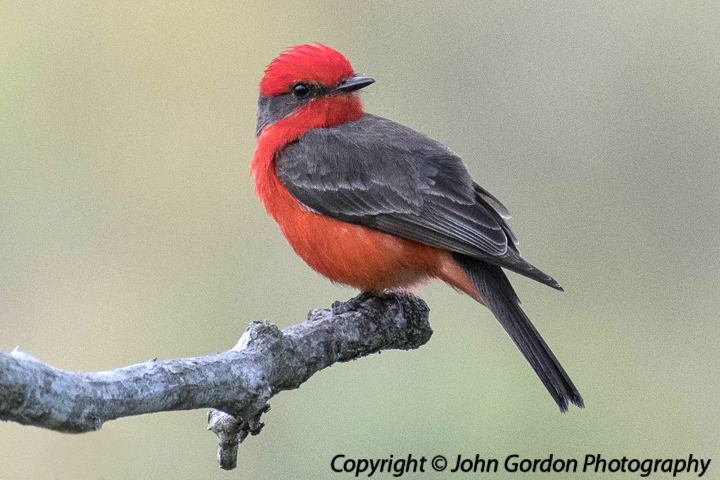
Finally but not least I finally tracked down a vermillion flycatcher. They never stay still and always manage to fence hop out of reach. This one I found while my fellow birders had gone ahead.
Our day was complete.
Thanks to Ed, Kevin, Myrna and the birds.
Vermillion flycatcher.
 Chula Vista List 1

Chula Vista  List 2


"It's never too late to start birding in Mexico"

John Gordon
Cloverdale/Langley
BC Canada